
Is The Boys Worth Watching? — The Core Premise
Yes—if you want a sharp, uncompromising superhero satire that holds real-world power structures up to a mirror. No—if you need escapist, feel-good viewing. Knowing which camp you’re in saves you the first 40 minutes.
The Boys is an Amazon Prime Video series in which superheroes are not saviors—they are branded corporate assets managed by Vought International, a media and pharmaceutical conglomerate. The central conflict places a group of powerless civilians (the titular “Boys”) against a licensed team of superhumans called The Seven, whose public image conceals corruption, violence, and unchecked egos.
The show’s premise is grounded in a single uncomfortable question: If someone had godlike powers and no legal accountability, what would that actually look like? Every narrative choice flows from that premise, making the storytelling unusually focused compared to most superhero properties. Learn more about its origins from the Wikipedia entry on The Boys TV series.
| Factor | The Boys | Standard Superhero Shows |
|---|---|---|
| Core Tone | Dark satire, political critique | Hopeful, action-forward escapism |
| Violence Level | Graphic, consequence-bearing | Stylized, largely bloodless |
| Protagonist Morality | Morally compromised antiheroes | Clear-cut good vs. evil |
| Power of Institutions | Central, corrupting theme | Background absent |
| Humour Style | Pitch-black and uncomfortable | Witty, crowd-pleasing |
| Guaranteed Happy Ending? | No—stakes are real | Usually yes |
| Binge Suitability | High, dense, layered arcs | Variable |
The Boys Season 4 Review: What Works and What Doesn’t
Season 4 is the show’s most politically explicit run. It doubles down on themes of radicalization, disinformation, and the mechanics by which dangerous ideologies gain mainstream legitimacy. Homelander’s arc in particular moves from isolated menace to movement figurehead—a deliberate escalation that reframes the entire series as a study in how fascism finds footholds.
What Season 4 Gets Right
The season earns its tension by refusing to offer reassuring outcomes. Characters make decisions driven by desperation rather than heroism, and the consequences accumulate rather than reset between episodes. The political allegory is blunt, but the character work beneath it is precise. Antony Starr’s performance as Homelander is the single most controlled piece of acting on streaming television in 2024—he communicates menace entirely through micro-expression. The Rotten Tomatoes critical consensus on The Boys consistently reflects this caliber of performance.
Where Season 4 Struggles
The season’s primary weakness is structural: it introduces more subplots than it resolves. The Gen V fallout storyline, in particular, demands familiarity with the spin-off to land properly, and viewers who skipped it will find several plot developments underdeveloped. The pacing in the middle third slows considerably, though the finale corrects this sharply.
Season 4 Verdict at a Glance
Strong performances and a coherent ideological argument. Pacing issues in the middle episodes and spin-off dependency are real friction points. Still among the best superhero content of 2024 — just not the tightest season the show has produced.
Homelander Powers — and Why They’re Not the Point
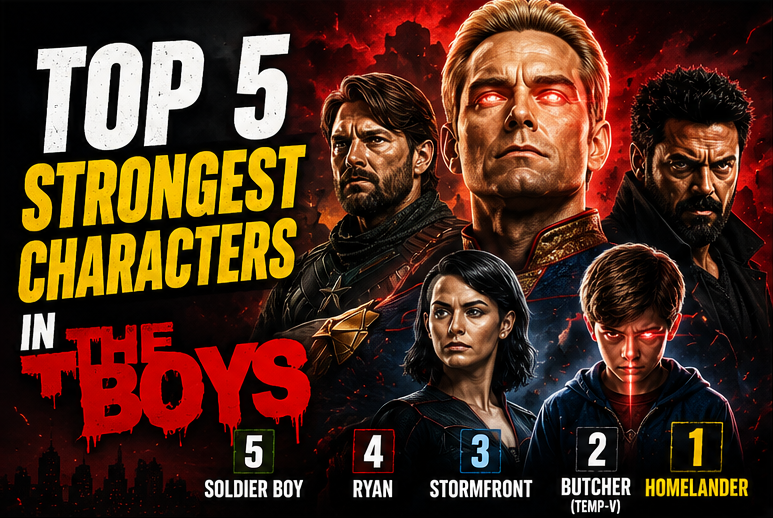
Homelander possesses flight, laser vision capable of melting steel at range, superhuman strength and durability, enhanced hearing, and near-total invulnerability to conventional harm. His physical capabilities make him the most powerful being in the show’s universe by a significant margin. No weapon available to civilian or government actors can reliably stop him. Understanding Homelander’s abilities is explored extensively in The Boys Fandom wiki entry on Homelander.
The show’s deliberate choice is to make Homelander’s psychology—not his homelander powers—the source of dread. He was raised in a laboratory, denied normal human attachment, conditioned to perform heroism while experiencing none of its moral framework. The result is a character who craves admiration compulsively and reads any withdrawal of approval as an existential threat. His powers become terrifying precisely because they’re backed by the emotional volatility of someone who never developed a stable sense of self.
| Homelander Power | Practical Threat Level | Narrative Function |
|---|---|---|
| Laser Vision | Lethal at any range | Represents unrestrained state violence |
| Flight | No terrain or barrier stops him | Symbolises immunity from accountability |
| Super Strength | Fatal to any unprotected human | Physical dominance over institutions |
| Enhanced Hearing | No private conversation is safe | Surveillance and paranoia |
| Near-Invulnerability | Conventional weapons useless | The system cannot remove him |
The Boys vs. Superman: A Direct Comparison
The Boys vs. Superman is the comparison every viewer reaches for because Homelander is visually coded as a Superman analogue—the cape, the star-spangled suit, the flight, and the laser eyes. The visual resemblance is intentional, and the show uses it as a mechanism to interrogate what the Superman archetype actually implies.
Superman stories, whether in comics, film, or television, are built on the premise that someone with limitless power chooses restraint out of genuine moral conviction. The power is real; the choice to not abuse it is the story. The Boys inverts this entirely: the power is real, and the absence of genuine moral conviction—of any stable ethical foundation—produces Homelander. Both characters wear the same costume concept. The difference is what’s underneath it.
| Factor | Superman (DC Tradition) | Homelander (The Boys) |
|---|---|---|
| Origin | An alien raised by loving human parents | Lab-created, raised in clinical isolation |
| Moral Foundation | Genuine ethical conviction, taught | Performed ethics, no internal compass |
| Relationship with Public | Protective, self-sacrificial | Dependent on public approval; predatory |
| Relationship with Power | Active restraint | Active exploitation |
| Institutional Role | Outside or above corporations | Product of and hostage to Vought |
| Thematic Argument | Power used rightly changes the world | Power without accountability destroys it |
The comparison is not that Homelander is a “dark Superman.” It is that Homelander is what Superman would be if the moral upbringing were removed. The show argues that the costume means nothing — the character wearing it is everything. For a deep dive into Superman’s canonical history for contrast, the DC Comics official Superman character page provides the source material context.
Butcher vs. Homelander: Who Actually Wins?
In a direct physical confrontation with no external variables, Homelander wins every time. Butcher vs. Homelander is not a contest on even terms—it is the show’s central metaphor for how ordinary people oppose systems that hold all the structural power. Butcher has no powers in the base configuration. He has rage, tactical intelligence, and a willingness to accept personal destruction in pursuit of an objective. That combination is compelling but not sufficient against invulnerability and laser vision.
What Temporary Compound V Changes
When Butcher uses Compound V to acquire temporary superhuman abilities in later seasons, the physical gap narrows but does not close. Homelander’s power ceiling remains higher, and crucially, Butcher’s Compound V use comes with a biological cost that Homelander doesn’t carry. The show uses this asymmetry deliberately: even when the underdog gains power, it costs him something the system never has to pay.
What the Rivalry Is Actually About
Butcher vs. Homelander is a conflict between two people who are mirror images in terms of their obsession and their willingness to hurt those around them in pursuit of a goal. Butcher is not a hero. He uses people, discards them, and rationalizes it. The show’s consistent position is that opposing a corrupt power structure while adopting its methods is not a victory. That tension is what makes the rivalry worth following across four seasons. The IMDb page for The Boys on IMDb documents this character development across all episodes.
The Boys Gen V Connection: What You Need to Know
The Boys Gen V connection is more significant than a standard spin-off relationship. Gen V is set at Godolkin University, a college that trains young superhumans produced by Vought’s Compound V program. The spin-off runs its own plot — a conspiracy within the university involving a secret biological weapon — but the events of Gen V feed directly into The Boys Season 4 without a clean narrative separation.
What Gen V Adds to Season 4
Season 4 of The Boys includes characters from Gen V whose motivations and transformations are only legible if the viewer watched the spin-off. Specific plot points — including the nature of a biological contagion and the fate of key student characters — are referenced in Season 4 as prior knowledge. Viewers who skipped Gen V will find these scenes explanatory rather than payoff-delivering, which is a meaningful difference in dramatic experience.
Can you watch The Boys without Gen V?
Yes, but Season 4 will be less effective. Gen V is a self-contained story with its own beginning, middle, and end. It also improves in quality as it progresses. Watching it before Season 4 is the recommended sequence. The Amazon Prime Video platform carries both series under the same subscription.
The Boys Ending Explained: Where the Story Lands
The Boys’ ending is designed to resist clean resolution. The series does not conclude with the defeat of Vought or the elimination of Homelander as a symbol. It concludes with a set of individual choices—some redemptive, some self-destructive—that argue the fight against corrupt institutions is ongoing, generational, and uncertain in outcome.
Butcher’s arc ends not with victory but with a form of reckoning. The cost of his methods is paid in full by the finale, and the characters who survive are those who made different choices than Butcher’s. The show’s final argument is that the means matter—that destroying a corrupt system using the system’s own logic produces a different kind of destruction, not a solution. The boys’ ending explained discussions online often focus on specific scene outcomes, but the thematic logic behind those outcomes is what gives the finale its weight.
Key Thematic Threads the Ending Resolves
Homelander’s arc: Moves from individual threat to institutional symbol — his resolution reflects the show’s argument about whether systems can self-correct.
Butcher’s arc: The cost of his methodology is finally made explicit. His ending is not punishment—it is consequence.
The Boys as a unit: The group’s survival depends on individual members choosing differently than Butcher. The show rewards that choice, narrowly.
Who Should Actually Watch The Boys?
- Viewers fatigued by predictable superhero formulas where the outcome is never genuinely in doubt
- Fans of political satire who want content with a defined point of view on institutional power and corporate influence
- Thriller and conspiracy-drama audiences—the show operates structurally as a thriller, not an action series
- Viewers who completed Gen V and want the full expanded-universe context
- Audiences who can engage with morally compromised protagonists without needing to like them
- Horror fans who prefer slow, dread-based tension over jump scares
- Adults (and mature teens 15+) willing to engage with content that is deliberately uncomfortable
Who Should Not Watch
Viewers seeking escapism, comfort, or clean moral resolution will find The Boys frustrating. The violence is not stylized or consequence-free—it is graphic and intentional. The show’s dark humor can be alienating depending on mood and circumstance. And its political arguments are delivered without subtlety; if you are not in the headspace for a show with a point of view, it will feel like being lectured at for eight episodes per season.
Frequently Asked Questions
Is The Boys too violent to watch?
For some viewers, yes — and that is a legitimate response. The show uses extreme violence as part of its satire, but the volume escalates each season. If graphic gore, body horror, or sexual violence causes genuine distress, The Boys is not the right choice. Starting with Season 1 gives an accurate gauge of personal tolerance before committing to the full series.
1 Is The Boys worth watching if I’m not a superhero fan?
Yes — and a meaningful portion of its fanbase came from outside the genre entirely. The show’s satire of corporate power, media manipulation, and celebrity culture functions independently of any interest in superheroes. Familiarity with Marvel or DC iconography adds texture, but it is not required for the show to be compelling.
2. Is Homelander stronger than Superman?
In raw capability, Homelander’s powers and Superman’s abilities are nearly equivalent—both have flight, laser vision, invulnerability, and super strength. The more useful answer is that The Boys vs. Superman comparison was never designed to produce a winner. It is a thought experiment about formation, not power levels. Homelander represents what Superman could become without the ethical architecture. Power level is almost beside the point.
3. Do I need to watch Gen V before The Boys season 4?
Not strictly required — Season 4 provides enough recap to follow the main plot. But the Boys Gen V connection means several Season 4 storylines land harder if Gen V has already been watched. The recommended order is Boys S1–S3, then Gen V, then Boys S4. Both shows are independently watchable.
4. What season does The Boys get good?
It is good from Episode 1. Season 1 is the most consistently structured season and the best entry point. Seasons 1 and 3 are widely considered the strongest. The Boys Season 4 review opinion is divided, but the overall series quality remains high enough to justify the full commitment.